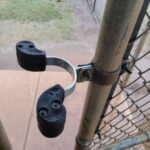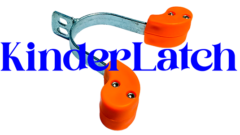
KinderLatch Addresses Playground Hazards
Achieving a Safer Standard: How KinderLatch Addresses the NRPA “Dirty Dozen”
At KinderLatch, our mission has always been to provide a safer gate hardware solution for the places our children play. We are committed to engineering products that align with the highest industry standards for playground maintenance and design.
The National Recreation and Park Association (NRPA) publishes a “Dirty Dozen” Playground Safety Checklist—a 12-point guide to identifying and eliminating common hazards. When we designed KinderLatch, we specifically looked at several of these points to ensure our hardware provides a safer alternative to traditional, outdated latches.
Here is how KinderLatch helps facility managers address key items on the Dirty Dozen list:
1. Eliminating Protrusion Hazards (Point #3)
The NRPA defines a protrusion hazard is a component or piece of hardware that is capable of impaling or cutting a child, if a child should fall against the hazard.
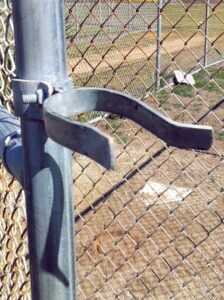
- The Traditional Problem: Standard “fork” latches use jagged metal that protrudes several inches from the fence post, easily defined as a hazard.
- The KinderLatch Better Way: Our patented “bulbous'” design removes these sharp hooks entirely. By using polymer radiused edges on the shielded sleeve, KinderLatch creates a better profile that deflects impact rather than catching or piercing the skin or eye.
2. Reducing Crush, Shear, and Sharp Edge Hazards (Point #10)
Point #10 of the Dirty Dozen. Components in the play environment should be inspected to make sure there are no sharp edges or points that could penetrate the skin.
- The Traditional Problem: Conventional latches have exposed “forks” that posse a severe risk of causing an injury, easily capable of penetrating the skin or an eye.
- The KinderLatch Better Way: We utilize a patented “bulbous'” cover that protects the sharp edges. Our design deflects the energy of the impact to lessen the risk of injury.
3. Simplifying Proper Maintenance (Point #9 on the”Dirty Dozen” #11 on the ” Daily Dozen” )
For a playground or ballfield to remain functional, it requires systematic, preventive maintenance to check for broken pieces, rust, or deterioration.
- The Traditional Problem: The original metal gate latch has been around for a hundred years and has become a forgotten part of our playgrounds and ballfields. Municipalities have become complacent in the maintenance of the old gate latches.
- The KinderLatch Better Way: While KinderLatch can’t truly make municipalities have a better maintenance plan, We can continue to bring better awareness to address the need for safer solutions .
A Safer Partner for Parks and Recreation
The NRPA “Daily Dozen” #12 recommends that all playgrounds be inspected by a Certified Playground Safety Inspector (CPSI). We encourage all facility managers to work with these professionals to ensure their play areas meet national standards.
By choosing KinderLatch, you aren’t just buying a latch; you’re choosing a better piece of hardware designed with the NRPA’s rigorous checklist in mind. Let’s work together to smooth out the edges of our community play spaces.
the-daily-dozen-12-point-playground-safety-checklist.pdf
dphhs.mt.gov/assets/ecfsd/childcare/STARS/Kits/DirtyDozenPlaygroundsHazards.pdf
KinderLatch: Better engineering for a safer day at the park.
For more information on the NRPA Daily Dozen and the Dirty Dozen, visit www.nrpa.org
CPSC.gov playground safety handbook
3.2.2 Protrusions
A protrusion is considered to be a hazardous protrusion when it can cause bodily injury to a
user who impacts it. Injury can include impalement or laceration.
3.4 Sharp points
Sharp points, corners or edges on any part of the playground or playground equipment may cut or puncture a child’s skin.
Sharp edges can cause serious lacerations if protective measures are not taken.
Fences should have no protrusion hazards located less than 54 inches above grade.
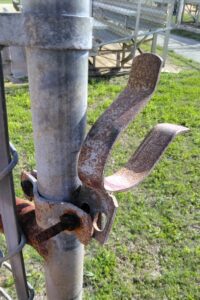
CPSC reports that 79% of all playground injuries are from falls, the remainder stem from contact with hazards.
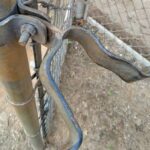
NEISS reports that from 2021-2023 there have been over 190k emergency room visits from public and private playgrounds.
ASTM F1487
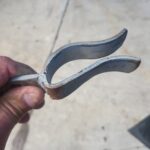
ASTM F1487 standard defines a protrusion hazard as any projection that, when tested, is found to be
capable of cutting a child, or catching clothing.